Posted

Open-source games have a reputation problem. Not necessarily because they’re bad, but because the bar for presentation is often somewhere on the floor. You find an interesting project, open it, and suddenly you’re looking at a UI that feels like it escaped from a university assignment in 2008.

Hypersomnia is a pleasant exception.

It’s a multiplayer top-down shooter that borrows a few ideas from Counter-Strike and Hotline Miami, then puts them together in a surprisingly ambitious little package. Bomb defusal, team fights, weapon variety, competitive matches. Nothing particularly unfamiliar on paper.
What’s interesting is what’s happening underneath.

No game engine. No 150 GB installation.

Hypersomnia is written in C++, from scratch, without relying on a conventional game engine. That’s already an interesting decision for a multiplayer game, but the networking implementation makes it even more worth looking at.

Instead of constantly sending the entire game state across the network, Hypersomnia uses deterministic simulation. Clients exchange player inputs and independently simulate the game. This approach is commonly associated with RTS games, where synchronizing hundreds of moving units through state updates would be impractical.

Even more interesting, the project aims to keep that simulation consistent across native desktop clients and the browser version.

That’s not a small engineering achievement.

And developers weren’t satisfied with just making a shooter. There’s also an integrated map editor, custom server support, community maps and the ability to play directly in a browser.

h2 . There’s actually a game here

Technical decisions aside, Hypersomnia is still a game, and it doesn’t forget that.
The top-down perspective changes how you approach familiar tactical mechanics. Positioning, line of sight, weapon choice and map knowledge matter. A bad decision can end a fight before you’ve had much time to react.
The game currently features 24 firearms, two main game modes (Bomb Defusal and Gun Game), and a collection of community-made maps.
The tutorial is also worth mentioning. It introduces the mechanics without expecting you to spend the first hour figuring out what every button does.
There are smaller details that make the experience feel considerably more polished than you’d expect. Even something as simple as footsteps through blood that leave temporary trails adds a surprising amount of character to the game.

The interesting part is that it’s open source

Here’s where Hypersomnia becomes more than another free multiplayer game.
The project is released under AGPL-3.0. Its source code is available, the game can be built independently, and you’re not locked into a proprietary engine or a commercial distribution platform.
You can play through Steam, download the Linux AppImage directly from the official website, or even launch the browser version.
The Linux build is roughly 42 MB.

Forty-two megabytes. let that sink in :)

I’ve seen applications that need more storage than that just to display a login screen.

There’s also infrastructure for hosting your own servers, which is particularly interesting if you’re interested in running your own gaming community rather than depending entirely on someone else’s matchmaking infrastructure.

Worth checking out

Hypersomnia isn’t trying to reinvent multiplayer gaming, and it doesn’t need to.

What makes it interesting is the combination of a playable competitive shooter, an unusually ambitious technical foundation, and a development model that doesn’t revolve around monetization.
It’s also a good reminder that open-source software doesn’t have to be a compromise in presentation or functionality.
If you’re running Linux, interested in game development, or simply looking for something to play with friends, even if your not in linux/foss stuff, it’s worth a look.

Visit Hypersomnia website

Hypersomnia GITHUB

STEAM PAGE

And if nothing else, you can always inspect the source code after losing a match. At least then you’ll have something else to blame.

Author

Posted

Last night, you probably had a dream where your third-grade teacher was driving a submarine made of ham, and you were late for a test you never studied for. You woke up, stared at the ceiling, and thought: What is wrong with my head?

A scientist named Erik Hoel published a study looking into this, and his answer is wild: your brain throws weird cartoons at you so you don’t turn into a glitchy robot.

—-

The Problem With Your Boring Day

Think about your average Tuesday. You wake up. You brush your teeth. You look at a screen. You make coffee. You look at another screen.

Your brain is a sponge that learns from everything you do. But if you do the exact same things over and over, your brain gets too good at just those things. It assumes the whole world is just desks, coffee cups, and spreadsheets.

Computer geeks see this happen all the time when training smart software. If you feed a computer 10,000 pictures of orange cats on white rugs, it gets amazing at spotting orange cats on white rugs. But show it a black dog on grass? The computer completely panics and crashes. It memorized the details so hard that it forgot how to think outside the box.

The Fix: Throw in Some Noise

How do computer programmers fix a machine that is stuck in a rut?

They mess with it. They feed the computer random static, warped photos, and crazy nonsense on purpose. That little bit of chaos forces the machine to stay flexible.

According to this paper, dreams are just your brain doing that exact same trick to itself.

Every night while you sleep, your brain goes:

> “Alright, buddy. You spent eight hours staring at numbers today. You are getting way too stiff. Time to make you ride a giant lobster through a shopping mall while your teeth fall out.”

By feeding you weird, broken, mixed-up junk, your brain resets its settings. It keeps your mind loose and ready for real life, where unexpected stuff happens all the time.

—-

You Aren’t Crazy, You’re Just Updating

So the next time you wake up in a cold sweat because you were trapped in an elevator with a talking raccoon who wanted your shoes, don’t worry about hidden meanings or bad pizza.

Your mind is just shaking off the dust from another boring day at work.

Author

Posted
Comments 0

Today, I visited a judicial services office in Iran for a work-related meeting. I went there to talk about work, but I ended up learning something interesting about the country’s digital infrastructure.
Just like the banking system, the judicial system uses a separate network. Employees need a VPN to connect to it instead of accessing everything through the regular internet.
At first, this makes sense. Judicial systems deal with sensitive information, and you probably don’t want random people on the internet accessing court records.
But the more I thought about it, the more questions I had.
What software are they running? How old is the infrastructure? How much of it could be improved with modern, free and open-source tools?
And, more importantly, could this become an opportunity to do something useful?

The Problem with Old Infrastructure

From what I saw, the systems in use seem seriously outdated. I haven’t inspected the actual infrastructure yet, so I can’t make claims about its exact age or security. But I can already see opportunities to explore better solutions.
Keeping a network separate from the public internet is not a bad idea by itself. In fact, systems handling legal records should have strict security controls.
However, isolation alone doesn’t make a system secure. Software still needs updates, access must be controlled, and administrators need tools they can maintain properly.
Old infrastructure can also make everyday work unnecessarily difficult. When systems are hard to maintain, depend on outdated software, or lack modern features, employees end up working around the technology instead of benefiting from it.
And this is where I think free software could help.

What Could We Replace with Free Software?

I’m interested in exploring whether some parts of this infrastructure could be modernized using free and open-source software.
I’m not talking about replacing the entire judicial system overnight. That would be expensive, risky, and probably a terrible idea.
Instead, I’d like to start with less sensitive services.
Think about internal communication, meetings, team collaboration, scheduling, and sharing non-sensitive documents between employees, judges, prosecutors, and lawyers.
Many organizations rely on proprietary platforms for these basic tasks, even when open alternatives already exist.
For example, Matrix could provide a foundation for internal messaging. Other open-source tools could handle collaboration, meetings, or document sharing.
Federation is especially interesting here.
Instead of forcing everyone to use one central platform, different departments or organizations could operate their own servers and communicate through shared protocols when appropriate.
This could give organizations more control over their infrastructure, reduce dependence on individual vendors, and make future migrations easier.
Of course, federation doesn’t mean connecting every system to the public internet. Sensitive legal records and critical systems would need separate security controls. Any deployment would have to be designed around the actual risks, not just the excitement of using new technology.
The goal is simple: use the right tool for the job, and avoid reinventing things that already work.

The Persian Language Problem

There is one challenge that could easily ruin an otherwise good project: Persian support.
And no, translating the interface is not enough.
A tool needs proper right-to-left support, correct text direction, usable Persian dates and calendars, reliable search, and layouts that handle Persian and English text together.
Anyone who has used poorly translated software knows the pain. Sometimes a button is in Persian, the error message is in English, and the text layout looks like it lost a fight with the browser.
That might be acceptable for a personal experiment. It is not acceptable for software used in legal work.
My preference is to take existing free-software projects and improve them instead of building everything from scratch.
If a good project needs better Persian support, we can work on the translation, fix the interface, improve the documentation, and contribute the changes upstream.
That way, the work can benefit other Persian-speaking users too.
I want to build something maintainable, not create another piece of software that only one person knows how to fix.

A Personal Complication

There is one slightly awkward detail about this potential project.
I have been detained for political reasons myself. I did not commit a crime. I exercised my right to freedom of expression, a basic human right.
Because of that experience, I obviously have complicated feelings about working with the judicial system.
But this is also a practical question. I need money to keep building Zist Digital, and a real infrastructure project could provide income while helping me develop something useful.
At the same time, I believe that building a free-software ecosystem in Iran requires us to work with organizations much larger than our own communities.
That includes universities, hospitals, industrial companies, banks, and government institutions.
Many of these organizations have outdated infrastructure and real operational problems. If we only work with people who already love Linux and open source, we will never reach much of the infrastructure that people depend on every day.
I don’t think working with an organization means agreeing with everything it does. But there are limits to the kind of work I am willing to accept, especially when technology could be used to make surveillance or political repression easier.
For me, the challenge is finding ways to improve the technology without ignoring the human consequences of how it is used.

A Small Note About My Detention

For context, my experience with the judicial system is not purely professional.
During my detention, I spent time in a small cell, roughly four by four metres, with a shower and toilet inside. The lights never went off. There was no window or clock, so I had to guess the time from the meals I received.
I was blindfolded whenever I was moved around the facility, and during interrogations, the interrogator sat behind me. I never saw the facility itself or even the staff working there.
My family was put under pressure and given false information. I also spent the entire detention dealing with nicotine withdrawal because I hadn’t written on my intake form that I smoked. Apparently, declaring it could have earned me a cigarette allowance. Great paperwork strategy on my part.
I managed to read two books, both religious, after repeatedly asking for something to read. I didn’t get to choose them.
It was a strange and difficult experience, and it is one reason this potential project feels different from an ordinary IT job.
I don’t want to turn this article into a story about my detention, but I also don’t want to pretend that my personal history has nothing to do with how I see this opportunity.

Why This Matters to Zist Digital

At Zist Digital, I care about digital continuity: building services that organizations can maintain and rely on even when the surrounding conditions are difficult.
Iran has plenty of reasons to care about that. Internet disruptions, access problems, changing service prices, and dependence on foreign platforms can all affect whether an organization can keep working.
Free software and open standards can help reduce those risks.
Organizations can inspect their software, maintain their own installations, adapt tools to their needs, and avoid being locked into a single vendor. Federated services can also give different teams more control over their own infrastructure.
None of this magically solves every problem. Open-source software still needs proper maintenance, security, backups, and people who know what they are doing.
But it gives organizations more options, and options matter.
I’d like to see these ideas become useful outside the small communities that already understand their value.

What Happens Next?

Right now, this is an idea, not a confirmed project.
I need to understand the existing systems, identify a practical starting point, and find out whether there is a genuine willingness to modernize anything.
The first step could be something relatively small: an internal communication service, a better collaboration tool, or improved Persian support for an existing open-source platform.
Any proposal would need to respect the security requirements of the institution, keep sensitive information properly protected, and avoid unsafe connections between isolated networks and external services.
It would also need a realistic budget and a maintenance plan. Installing software is the easy part. Keeping it running five years later is the real work.
I don’t know whether this opportunity will turn into anything. But it has made me think about what it actually takes to build a free-software ecosystem.
We need more than blog posts, Linux meetups, and arguments about which license is the most ethical.
We need working systems, real users, long-term maintenance, and organizations willing to try something different.
Sometimes, that means working with people who already share our values. Sometimes, it means approaching an organization we never expected to work with.
And sometimes, it means visiting a judicial office for a business meeting, discovering that its network runs separately from the internet, and leaving with a completely different set of questions.
Maybe nothing will come of it.
Or maybe the next step toward a stronger free-software ecosystem in Iran starts with something as simple as helping an organization use better software.
We’ll see.
Author

Posted

The gaming industry seems locked in a relentless race to discover new ways to squeeze money out of players. From microtransactions to subscription hikes, the pressure has been building for years. But a recently uncovered Microsoft patent takes monetization to a level that feels distinctly dystopian. Titled “Contextually Aware Management of Interactive Software Application Access” (US20260260258A1), the patent describes a gaming ecosystem where your playtime is dictated by mandatory advertisements and constant surveillance.

Fortunately for PC gamers, Valve saw this coming from a mile away and has already laid the groundwork to stop it in its tracks.

Surge Pricing for Your Free Time

The foundation of Microsoft’s patent revolves around rationing your gameplay. Instead of buying a game and playing it at your leisure, the system proposes that players earn temporary access by watching “promoted audiovisual information” (commercials). Watching an ad grants you a “credit,” which translates to a specific amount of time you are allowed to play.

The most aggressive aspect of this system is that the value of your time is dynamic. According to the patent, a single credit might earn you an hour of playtime on a quiet weekday afternoon, but that exact same credit could only be worth 30 minutes on a busy weekend evening. Microsoft is effectively outlining a surge pricing model for your free time, targeting the exact hours you value the most to serve you more advertisements.

The Always-Listening Controller

One of the most obvious flaws with putting ads in video games is the risk of interrupting crucial gameplay moments, like a boss fight or the final seconds of a multiplayer match. Microsoft’s proposed solution to this problem is a deeply invasive surveillance system.

The patent describes using machine learning to monitor everything happening on your screen and in your living room to determine the perfect moment to pause your game and serve an ad. This “contextually aware” system would analyze:

  • In-Game Events: Tracking health, eliminations, weapons used, and overall game state.
  • Player Inputs: Monitoring how you are using the controller.
  • Audio Surveillance: Utilizing your microphone to capture and analyze player chat and commentary.

By building a personalized advertising profile based on everything you do and say while playing, the system ensures that it only interrupts you when it calculates you are least likely to quit out of frustration.

Steam’s Trap Card

While Microsoft is engineering complex systems to ration your playtime and monitor your microphone, Valve had already blocked this exact business model.

Over a year ago, Steam quietly updated its developer rules to explicitly ban games that require players to engage with advertisements to play. Steam’s guidelines now state:

  1. Developers cannot require players to watch or engage with advertising in order to play or gate gameplay behind advertising.
  2. Developers cannot use advertising to provide value to players, such as rewarding them with gameplay time for watching an ad.

Microsoft managed to patent the precise monetization scheme that the biggest PC gaming storefront in the world has already outlawed. While Microsoft could technically implement this system within their own walled gardens like Game Pass or Xbox Cloud Gaming, they will not be able to force this model onto Steam’s massive player base.

The Diverging Paths of the Industry

This stark contrast highlights two fundamentally different approaches to the modern gaming market. Microsoft’s patent reflects a corporate obsession with the “Total Addressable Market” (TAM) the idea that every second of player attention must be monetized, regardless of whether that player can afford a full-priced game. They are actively trying to turn leisure time into advertising inventory.

Valve, on the other hand, continues to dominate the market simply by making a consumer-friendly platform that respects the player. By prioritizing easy refunds, community features, and strict rules against hostile monetization, Steam has built an immense amount of consumer trust. As major publishers desperately try to extract more revenue through ads and subscriptions, Steam remains the definitive sanctuary for players who just want to buy a game and actually own their experience.

Author

Posted

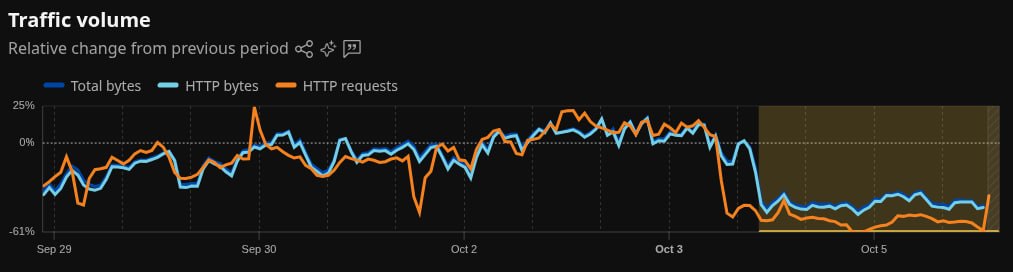
The internet situation in Iran has been getting increasingly worrying lately.

Datacenters are getting disconnected from the internet, and apparently some of them won’t be connected again unless you provide full information about the real person behind them. Overall connectivity has dropped heavily, and we’re seeing strange behavior with UDP and DNS as well.
One day something works normally. The next day you’re debugging it for three hours and not realizing the problem isn’t even your server.

I’ve been thinking about this kind of thing since the big internet shutdowns. When normal communication stops working, you start thinking differently about infrastructure. Having another way to communicate stops being just a nice little side project and starts becoming something you actually want to have ready.

That’s where the Matrix server comes in.
I wanted to run Synapse with Cinny as the web client and make a small, independent place for people to communicate. Nothing huge, just something useful that doesn’t depend entirely on the usual services.

There was one problem: I didn’t have the money to pay for the infrastructure.
So I asked people if they would be willing to donate.
Before anyone could even answer, Paasta Cloud volunteered to give me credit on their platform to host it.
Honestly, the timing couldn’t have been better.
Now I can actually build it instead of sitting around wondering how I’m going to afford the server.
I’m not pretending one Matrix server is going to solve Iran’s internet problems. It obviously won’t. But when the network keeps becoming less predictable, I think having independent infrastructure and more ways to communicate is worth doing.
So that’s what I’m working on now.
Synapse on the backend, Cinny on the front, and hopefully a bunch of people using it soon.

Huge thanks to Paasta Cloud for stepping in so quickly.

I just hope these disruptions are because of poor infrastructure and not because someone is preparing to cut the internet for the fourth time. :)

Author